
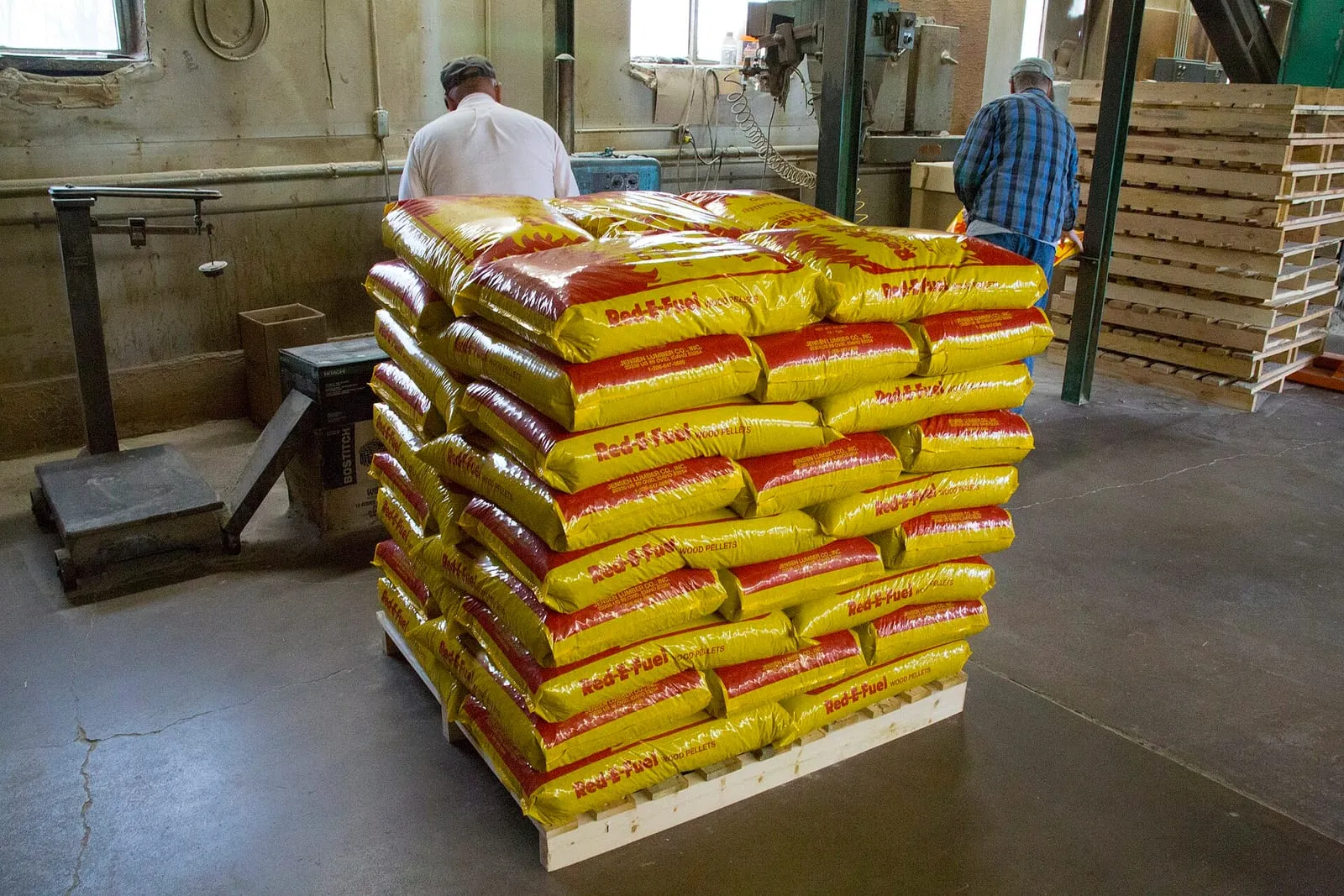

A single truckload is a transaction. A monthly supply agreement is a set of expectations about volume, timing, product and price that both sides rely on for months — often across a heating season, when neither can easily find an alternative.
Most problems in pellet supply are not quality problems. They are expectation problems: a load that arrived in the wrong week, a product substituted without notice, a price that moved when one side thought it was fixed. Nearly all are preventable in the hour it takes to write the terms down.
This guide covers what belongs in that agreement. It does not re-explain product quality or freight arithmetic — those have their own guides, linked below.
Start with your own demand, not the supplier’s minimum
Forecast before you negotiate. A supplier’s quoted minimum is a commercial position, not a plan.
Work from what you moved last season, month by month, adjusted for anything that has changed. With no history, build from storage capacity and expected turn rate rather than an annual total divided by twelve — pellet demand is weather-shaped, not flat.
Then decide how much of that forecast to commit. Committing all of it gets the best terms and leaves nowhere to go in a warm winter; committing 60–70% and buying the balance on the spot market is the more common arrangement, and worth asking for explicitly.
Quantities, delivery windows and cut-offs
Three numbers prevent most scheduling arguments.
The monthly quantity, and whether it is a firm commitment, a forecast, or a minimum with an agreed tolerance. A ±10% tolerance on each delivery is normal and saves everyone from arguing about a part pallet.
The delivery window, as a range rather than a date. “Week 46” is achievable; “the 12th” invites a failure that was never realistic.
The order cut-off, which is the one buyers most often leave out. How many working days before the window must the call-off be placed? If the answer is five, a Thursday order for the following Monday was never going to work, and knowing that in advance is worth more than complaining afterwards.
A hypothetical schedule
The following is an illustrative example, not a customer contract and not a statement of available capacity.
A distributor forecasts 96 tonnes per month and splits it into four deliveries of approximately 24 tonnes, one per week. Twenty-four tonnes is in the region of a full articulated load, which makes each delivery efficient to freight.
Whether 24 tonnes actually fits depends on the pallet configuration and the legal payload of the vehicle assigned. At roughly 1,000 kg per pallet that is about 24 pallets; at roughly 775 kg it is closer to 30 for the same weight. Our guide to how many pallets of wood pellets fit on a truck works that arithmetic through.
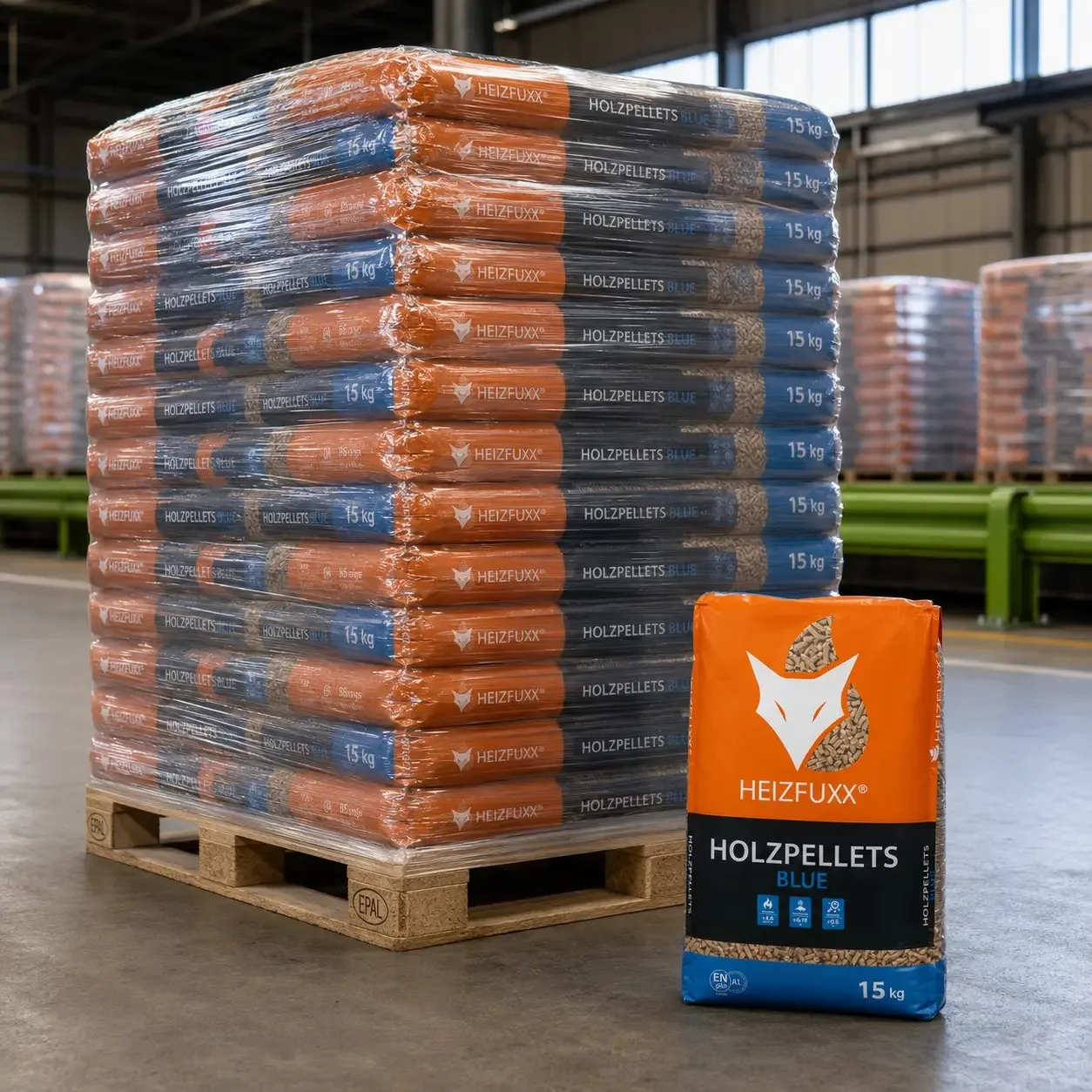
A palletised delivery unit: 15 kg bags, shrink-wrapped. A product in our catalogue, photographed by the supplier — not a Premium Bio Pellet facility.
Define the product, not the category
“ENplus A1, 15 kg bags” is a category. It is not a product, and an agreement written that loosely entitles your supplier to send you anything that fits the description.
Name, in writing:
- the product and brand, exactly as it appears on the bag;
- the producer, where the specification names one;
- the quality specification — the figures, not just the class;
- the packaging: bag weight, bags per pallet, pallet type, and whether pallets are exchangeable;
- whether substitution is permitted, and if so, on what notice and against what equivalence test.
That last point matters more than it looks. “Equivalent product” means nothing. “Equivalent or better on ash, moisture and durability, specification supplied before dispatch, buyer may refuse” means something.
For what each figure does in practice, see our buyer’s guide to choosing premium wood pellets.
Certification: verify, do not assume
A grade printed on a bag is the manufacturer’s statement. A current certificate held by a named company is independently verified. They are not the same claim, and an agreement should be clear about which one it is buying.
Where certification is claimed, ask for the certificate holder’s name and ENplus identification number, then check that number in the official ENplus register of certified companies rather than relying on packaging, a brochure, or a PDF forwarded by the seller. Confirm the certificate is current, that the name matches the company you are contracting with, and that the scope covers the activity — production and trading are certified separately.
Certificates also lapse. Over a twelve-month agreement that is a live risk, so agree now what happens if one does.
Our certifications page explains how we publish the class each product’s own specification declares — including the products that declare none.
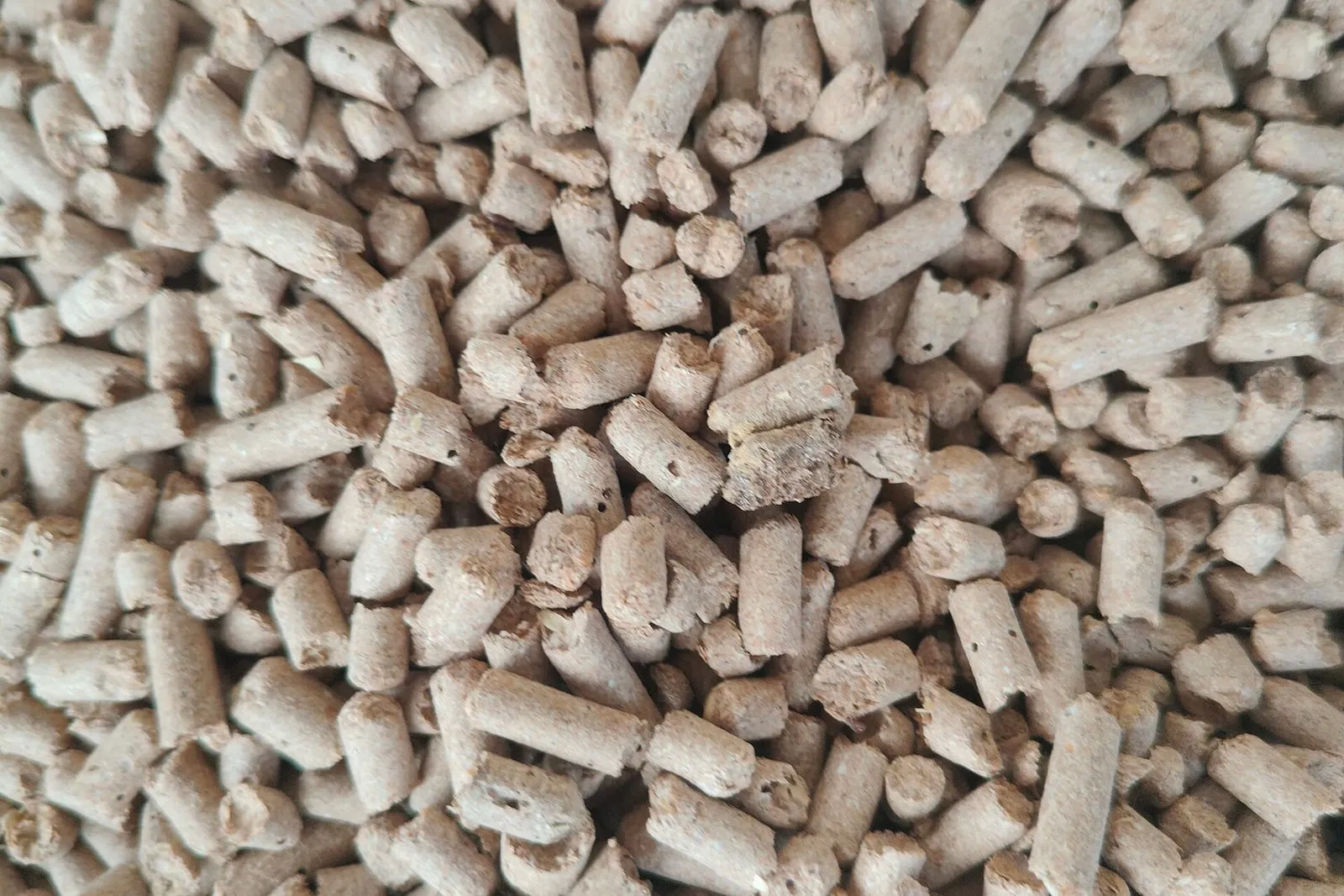
Illustrative close-up of wood heating pellets. Photograph: Ranjithkumar Murugesan, Wikimedia Commons, CC0.

Price, and everything that sits beside it
Agree whether the price is fixed for the term or reviewed periodically, and if reviewed, how often, against what, and with how much notice. Neither is wrong. An unstated arrangement is.
Then settle the things that are not the price but change what you pay:
- Transport — included or charged separately, and on what basis.
- Delivery terms — the Incoterm. EXW, FCA, DAP and DDP place the cost, the risk and the customs obligation in very different places.
- VAT treatment, which for cross-border EU movements depends on the parties’ registrations rather than on the goods.
- Unloading — whose responsibility, and whether a tail-lift vehicle is needed. A site with no forklift needs one, and a tail-lift reduces payload.
- Pallets — exchange, chargeable, or one-way.
When something goes wrong
It will, at some point. Write down the answers while everyone is relaxed:
- Shortages — how evidenced, how credited.
- Late deliveries — made up in the next window, or treated separately?
- Substitutions — permitted on notice, or not at all?
- Damaged bags — the reporting period, the evidence required, credit or replacement.
- Repeated failure — what entitles either side to exit.
Start with a trial
Before committing to a season, take one documented load of the exact product you intend to buy.
Document it: photograph the pallets on arrival, record bag count and pallet weights, note the wrapping, keep the paperwork. That single load tells you more than any amount of correspondence, and gives you a reference point if a later delivery is not the same.
Agreement checklist
- Monthly quantity, and whether firm, forecast or minimum with a tolerance
- Number of deliveries and the delivery windows
- Order cut-off, in working days
- Exact product, brand and producer
- Full quality specification, in figures
- Packaging: bag weight, bags per pallet, pallet type and exchange
- Certification status, with the ENplus ID verified in the official register
- Price basis: fixed or reviewed, with review frequency and notice
- Transport charges and the Incoterm
- VAT treatment
- Unloading responsibility and equipment required
- Remedies for shortage, delay, substitution and damage
- Term, notice and exit
- A documented trial load before any of it starts
Request a monthly supply quotation
Premium Bio Pellet Sp. z o.o. is a Polish wholesale distributor. We distribute pellets produced by third parties — we do not manufacture the products in our catalogue, and we publish each one’s technical specification in full rather than summarising it.
For a monthly supply discussion, tell us your forecast tonnage, preferred delivery pattern, packaging, destination and unloading equipment, and we will come back with what we can support.
Premium Bio Pellet Sp. z o.o. sales@premiumbiopellet.com · +48 503 926 656
Browse the wood pellet catalogue to compare published specifications, or request a quotation directly.